Project Overview
Delinquency is one of the most critical yet fragile workflows in property management. It directly affects cash flow, legal exposure, and day-to-day operations for property teams.
I led the design of a case-based Delinquency Management system that helped property teams move from reactive follow-ups to proactive, compliant resolution without removing human judgment from legally sensitive decisions.
Role
UX Designer
Team
1 UX Designers, 2 Engineers, 2 Product Managers, CEO, COO
Duration
3 months
Tools
Axure, Figma, Miro
Context and Challenges
Property managers oversee hundreds to thousands of units. At portfolio scale, even a small percentage of late rent creates material revenue, operational, and legal risk for property teams.
Yet delinquency was managed through disconnected tools and manual follow-ups, forcing teams to rely on memory and ad-hoc processes for legally sensitive decisions. This made it difficult to understand what had already happened in a case, what needed to happen next, and whether actions taken were defensible.
As a result:
The system lacked consistency, visibility, and defensibility especially during legal escalation.
Follow-ups were reactive rather than system-driven
Similar cases were handled inconsistently across teams
Critical actions were poorly documented, increasing legal risk.
How might we help property teams resolve delinquency earlier and more consistently while reducing legal and operational risk?
Here's what I came up with - A three-part solution
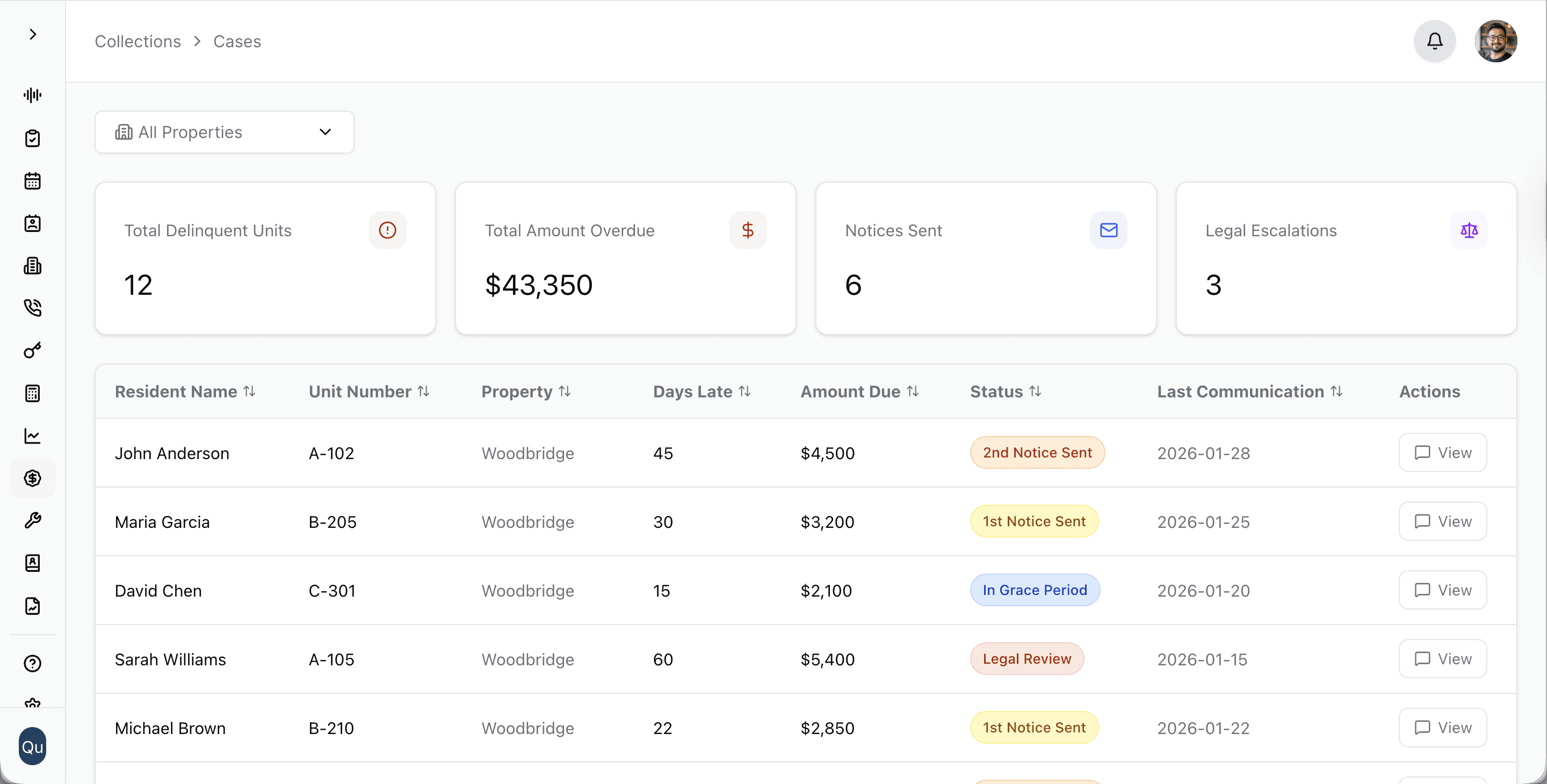
I designed a centralized Cases Dashboard that allowed teams to:
See all active delinquency cases in one place
Prioritize cases by days late, amount due, and status
Understand portfolio-level risk at a glance
1
designed a guided case workflow that allowed teams to:
Track and prioritize delinquent residents before legal escalation
Understand case status, payment history, and communication context
Take the right next action with AI support and human oversight
2
designed a legal-stage case flow that allowed teams to:
3
Identify legally escalated cases directly from the main Cases Dashboard
Review legally relevant communication, actions, and notices in one place
Take only compliant next steps with AI guidance and role-based controls
How did I reach here..
Delinquency workflows sit at the intersection of finance, legal compliance, and human judgment. Any ambiguity in the system directly translated into operational risk.
I grounded the design in 2 principles -
Make the system predictable
Property managers don’t just need information; they need to know what will happen next.
Instead of surfacing more data, I focused on:
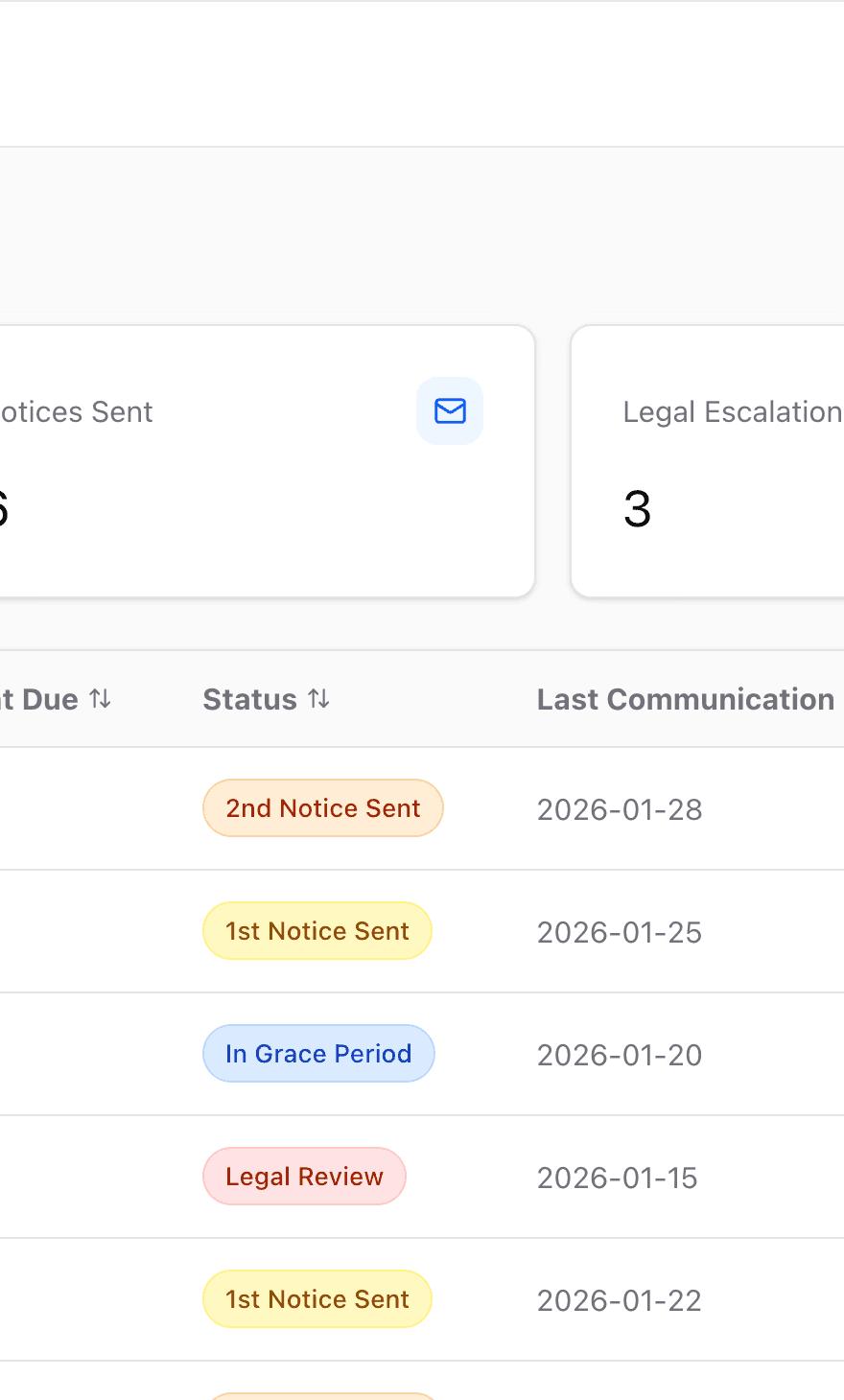
Clear case statuses with defined meaning
Consistent transitions between states
This ensured that two similar delinquency cases would behave the same way, regardless of who was managing them.
Tradeoff - I intentionally limited flexibility in favor of predictability, especially as cases approached legal escalation.
Automate Repetition, Not Judgement
Automation was necessary to reduce manual effort, but it could not replace human accountability.
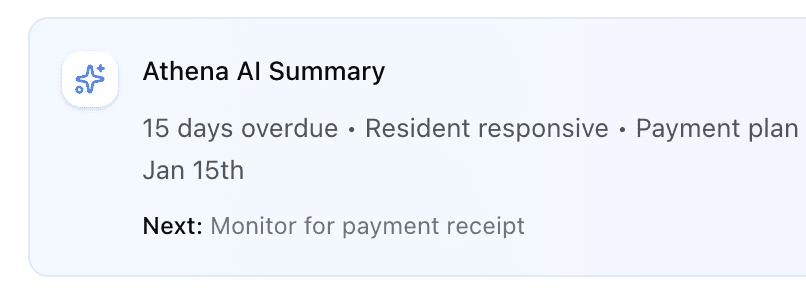
I designed AI to:
Tradeoff - Full automation could have reduced effort further, but would have increased legal and ethical risk.
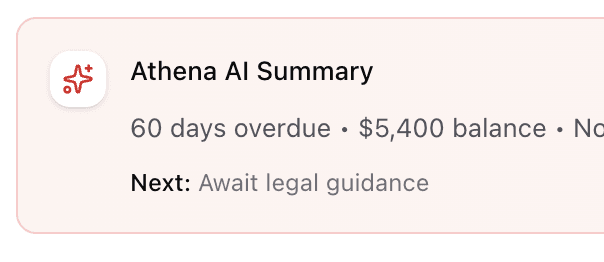
Recommend a compliant next step
Triggering follow ups
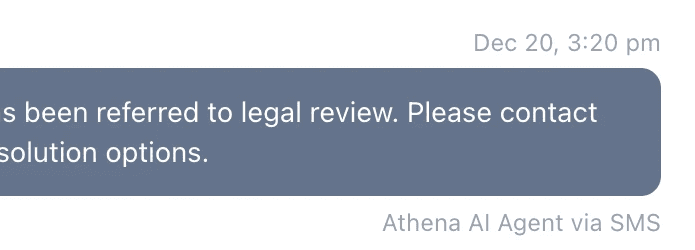
The AI did not make irreversible decisions or trigger legal actions autonomously.
Summarize context and highlight the last action taken
What I Chose Not to Build (And Why)
Design is as much about restraint as it is about creation.
I intentionally avoided:
Editable timelines that could compromise audit integrity
Free-form actions during legal stages
Overloading dashboards with secondary metrics
Each omission was a deliberate choice to preserve clarity, defensibility, and trust.
Outcome & Impact
Enabled earlier and more consistent delinquency resolution
Cut time spent reconstructing case history and context
Improved confidence during audits and legal review